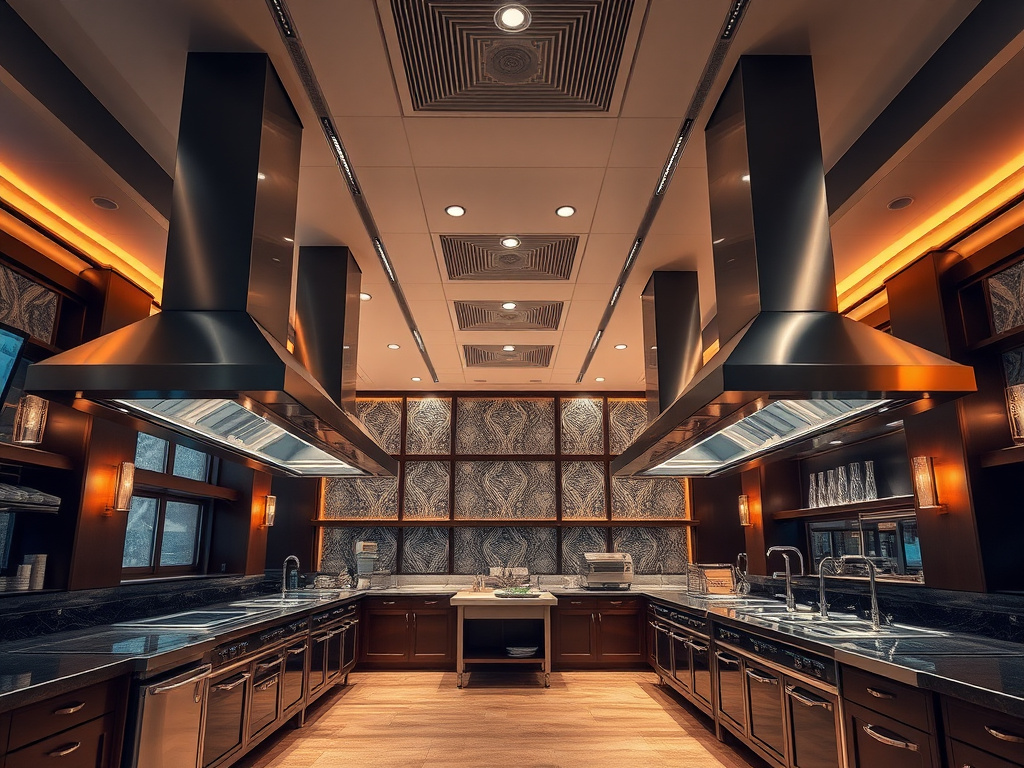
A single-restaurant hood cleaning is a relatively simple scheduling problem: pick a slow window, get the crew in, get it done before the next service. A large Scottsdale or Phoenix-metro resort property is a different problem entirely. Multiple kitchen outlets, each with its own hood system, each on its own operating hours, all under one property — and every single one of them still has to meet NFPA 96 compliance on its own schedule.
Why Resort Properties Are a Different Scheduling Problem
A full-service resort in the Scottsdale corridor typically operates several distinct kitchen outlets under one roof:
- Banquet and event kitchens — high-volume, but often used in bursts tied to event calendars rather than daily service
- Room-service and in-room-dining prep kitchens — lower visible volume but frequently 24-hour or near-24-hour operation
- Multiple restaurant concepts — a resort might run a steakhouse, a poolside grill, and a breakfast buffet concept, each with its own menu, cooking equipment, and cooking volume
- Bar and lounge cook lines — smaller footprint but still subject to the same exhaust-system rules if there's any cooking equipment involved
Each of these outlets can land on a different NFPA 96 Table 12.4 frequency tier based on its actual cooking volume and equipment type — a 24-hour room-service kitchen with wok or charbroil equipment may require quarterly service while a lower-volume banquet kitchen used mainly for events might fall into the semi-annual tier. Treating a whole property as a single compliance unit misses this — each hood system's documentation and schedule has to stand on its own if a fire-marshal or health inspector asks to see it.
Overnight and Low-Occupancy-Window Scheduling
The single biggest operational constraint on resort hood cleaning isn't the work itself — it's finding a window that doesn't put a crew in an active kitchen during service hours, doesn't create noise or disruption near guest-facing areas, and doesn't collide with another outlet's own service window on the same property.
The practical answer for most large properties is overnight and low-occupancy-window scheduling: cleaning crews work after a kitchen's last service and complete before the next morning's prep begins, rotating through each outlet on its own timeline rather than trying to service the whole property in one pass. A banquet kitchen with no events scheduled on a given week might get daytime access; a room-service kitchen running near-continuous hours needs a tighter overnight window worked around its lowest-activity stretch.
This kind of scheduling only works with real coordination between the cleaning provider and property operations — knowing the banquet event calendar, room-service peak hours, and each restaurant concept's closing time in advance, rather than showing up and hoping for the best.
Discretion Around Guest-Facing Areas
Resort kitchens aren't isolated back-of-house spaces — many sit close to guest corridors, pool areas, or event spaces where equipment noise, degreasing odor, or visible crew activity can be noticed by guests if the work isn't planned with that in mind. Servicing kitchens during true low-occupancy windows, using entrances and service corridors that avoid guest paths, and containing odor and noise as much as the job allows are all part of doing this work on a hospitality property, not just a scheduling afterthought.
This is a meaningfully different consideration than a standalone restaurant, where the whole building is typically closed during the cleaning window. On a resort, guests are almost always present somewhere on the property regardless of what time the crew works.
Multi-Outlet Coordination Without Losing Track of Compliance
The real risk on a large multi-kitchen property isn't usually getting any single hood system cleaned — it's losing track of which outlet is due for service on which schedule, and ending up with inconsistent or incomplete documentation across the property. A property with five kitchen outlets on three different frequency tiers, serviced by different crews at different times over the course of a year, needs a coordinated record — not five separate paper trails that nobody's cross-checking.
That's where a single provider managing the whole property under one scheduled maintenance contract has a real advantage over calling for one-off service outlet by outlet: it keeps every kitchen's documentation current and retrievable from one source, which matters directly the day a fire marshal or Maricopa County health inspector asks a facilities manager to produce records for every kitchen on the property, not just the one closest to the front desk.
Volume-Based Contract Pricing for Large Properties
Because scope on a resort property is driven by number of kitchen outlets and hood systems rather than a single flat job, pricing for multi-kitchen properties is typically structured around outlet count and combined system complexity rather than a per-visit flat rate. A property-manager-focused quote process that asks how many kitchen outlets are on-site, what each one's approximate cooking volume looks like, and what scheduling constraints exist (event calendar, room-service hours, guest-facing sensitivities) produces a far more accurate quote than treating a resort like a single large restaurant.
Frequently Asked Questions
How does hood cleaning work for hotels with multiple kitchens on one property? Each kitchen outlet is treated as its own compliance unit with its own NFPA 96 frequency tier based on its actual cooking volume, scheduled individually (often overnight or during low-occupancy windows) to avoid disrupting that outlet's service hours, with documentation coordinated across the whole property under one provider so records stay complete and retrievable.
Can hood cleaning be scheduled overnight so it doesn't interrupt service? Yes — this is the standard approach for resort and hotel properties. Crews typically work after an outlet's last service and finish before the next prep period begins, coordinated around each kitchen's specific hours.
Do multi-location or multi-outlet properties get contract pricing? Yes — pricing for large properties is typically structured around number of kitchen outlets and combined system complexity, and a scheduled maintenance contract covering the whole property is generally more cost-effective and easier to track than calling for one-off service per outlet.
If you manage a resort, hotel, or multi-kitchen property in the Scottsdale or Phoenix-metro area, call PHX Hood Vent Cleaning at 844-967-5247 or email josh@contractorschoiceagency.com to request a free quote for your property — our property-manager quote process accounts for outlet count, scheduling constraints, and documentation needs from the start.