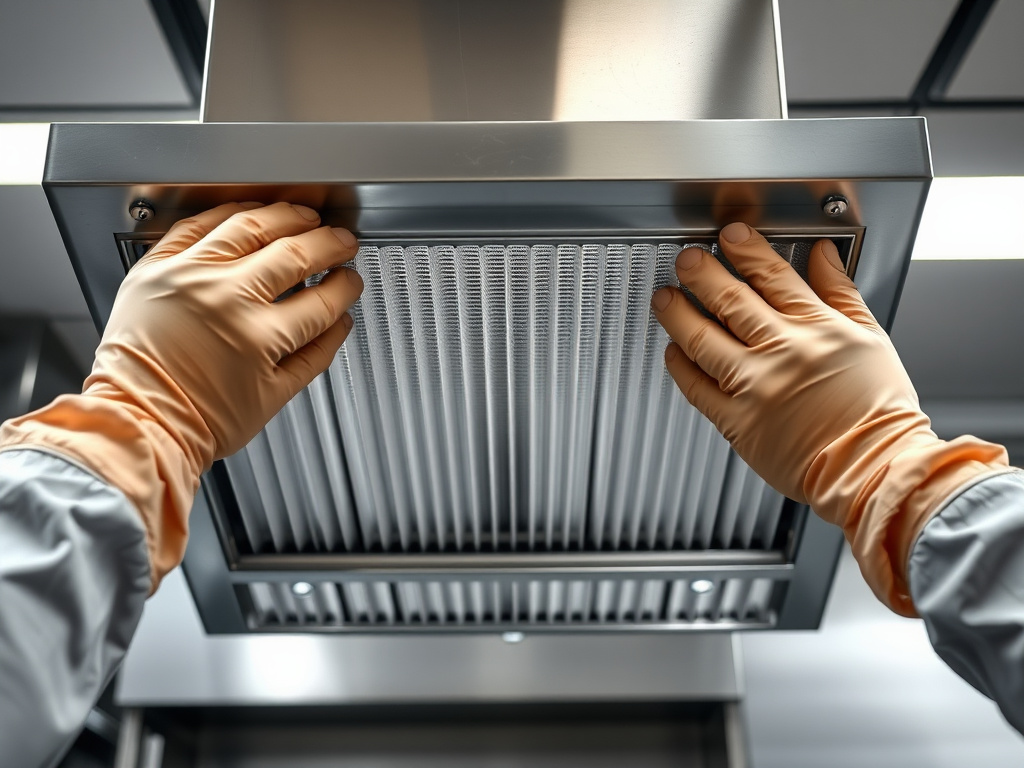
Hood Filter Cleaning & Exchange Program — Phoenix Commercial Kitchens
Baffle and mesh filters do the first-line work of catching grease before it reaches the plenum, and they get dirty faster than the rest of your hood system — which is why filter cleaning shouldn't wait for your next full service. Our filter exchange program swaps your dirty filters for a clean, degreased set on a fixed schedule, so your kitchen is never running without properly functioning grease capture between full hood cleanings.
What's Included
- Clean, degreased filters delivered on a fixed rotation
- Dirty filters picked up and taken off-site for caustic-tank cleaning
- Baffle and mesh filter compatibility checked against your hood system
- Damaged or warped filters flagged and replacement recommended
- No on-site soaking, no dish-pit backup from grease-caked filters
- Exchange logs kept as part of your documentation trail
Why Filters Need Attention Between Full Cleanings
Baffle filters are the single most grease-loaded component in your exhaust system, because every ounce of smoke and vapor that leaves the cook line passes through them first. On a busy kitchen, filters can visibly clog within days — long before your next scheduled hood cleaning. A clogged filter isn't just a cleaning problem, either: it restricts airflow, which forces your exhaust fan to work harder and lets more unfiltered grease reach the plenum and duct.
Filters are also one of the most-cited items on both a fire inspection and a Maricopa County health inspection — a visibly clogged or missing filter is an easy, fast flag for an inspector even when the rest of the kitchen is in good shape.
How the Exchange Program Works
Instead of pulling filters and cleaning them on-site — which ties up your dish pit and puts caustic soaking chemicals in a kitchen environment — we run a swap program. On each visit, your dirty filters are removed and replaced immediately with an equivalent clean, degreased set. The dirty filters go off-site for proper caustic-tank cleaning and come back into rotation for a future visit, so there's zero downtime and no line cook stuck scrubbing filters after close.
Because the swap happens in minutes, exchange visits can be scheduled during a shift change or a slow window rather than requiring the overnight access a full hood cleaning needs — a meaningfully lighter lift on your kitchen's calendar.
Baffle vs. Mesh Filter Compatibility
Baffle filters are the NFPA 96-compliant standard for most commercial cooking equipment — they're UL-listed for grease removal and required over most cooking surfaces. Mesh filters are still common in older installations but generally don't meet the same fire-code standard for high-heat cooking. We check what's currently installed against what your equipment actually requires and flag any mismatch before it becomes an inspection issue.
If your kitchen is running mesh filters over a charbroiler or wok station, that's worth flagging immediately — it's exactly the kind of mismatch a fire inspector is trained to catch, and correcting it before an inspection is far simpler than after a violation notice.
Flagging Damage Before It's a Problem
Filters warp, dent, and develop gaps over time, especially in high-heat, high-volume kitchens. A warped or gapped filter lets grease-laden air bypass the capture surface entirely, which defeats the purpose no matter how clean the rest of the filter is. Every exchange visit includes a check for physical damage, with clear flagging and replacement recommendations rather than reinstalling a filter that isn't doing its job.
Because the exchange happens on a fixed rotation, damaged filters get caught and swapped out on the next scheduled visit rather than sitting unnoticed for months between full hood cleanings.
How This Fits With Your Full Hood Cleaning
Filter exchange doesn't replace a full NFPA 96 hood cleaning — it covers the gap between them. Your plenum, duct, and rooftop fan still need service on the frequency tier your kitchen falls into under Table 12.4. Filter exchange keeps the first line of defense clean on a tighter interval, which is especially useful for high-volume kitchens on a quarterly hood schedule that would otherwise go months with increasingly clogged filters in between.
Kitchens on a maintenance contract often bundle filter exchange in alongside their full hood cleaning tier so both run on a coordinated, automatically scheduled rhythm instead of two separate arrangements to track.
How Filter Exchange Pricing Works
Exchange programs price differently than a one-off filter cleaning because the cost covers a rotating inventory of clean filters, not a single cleaning event. Instead of paying to have your existing filters pulled, soaked, and reinstalled every time, you're paying for continuous access to a clean, degreased set that's swapped in immediately — the caustic-tank cleaning of your dirty set happens off-site and off your clock. Pricing is typically set per exchange visit based on filter count and size, with volume pricing for kitchens running larger hood systems or multiple exchange points.
Logistics run on a fixed route rather than a one-off dispatch, which is part of why exchange visits cost less per swap than scheduling an independent service call each time. A route stop takes minutes rather than the hour-plus a full pull-and-clean would require, and because the swap set is pre-staged before the crew arrives, there's no waiting on-site while filters are cleaned in a truck or van.
For kitchens already on a hood-cleaning maintenance contract, filter exchange typically folds into the same invoice and schedule rather than running as a separate billing relationship — one predictable line item instead of two vendors to track.
Setting Up a Recurring Exchange Schedule
Exchange frequency is typically set separately from your hood cleaning tier — often monthly or biweekly for high-volume kitchens, less frequent for lower-volume operations. We'll set an interval based on your actual cooking volume and adjust it if your kitchen's output changes. Filter exchange also pairs naturally into a broader scheduled maintenance contract alongside your full hood cleaning.
There's no minimum commitment required to start — we can run a single exchange visit to see how your kitchen's clean set compares to what's currently installed before committing to a recurring interval.
Filter Exchange Across the Phoenix Metro
Exchange routes run across Phoenix, Scottsdale, Tempe, Mesa, Chandler, Glendale, Gilbert, Peoria, and Surprise on a fixed circuit, which keeps per-visit cost down compared to a one-off service call and makes it realistic to run exchange on a tight interval for kitchens that need it. Restaurant groups with multiple locations across the metro can put every site on the same exchange schedule under one account.
Phoenix's summer heat plays a role here too — grease that's already partially cooked by ambient rooftop and duct temperatures reaches the filter in a stickier, faster-clogging state than it would in a milder season, which is one more reason high-volume kitchens in the Valley often tighten their exchange interval during the hottest months rather than keeping a flat year-round schedule.
Filter Cleaning & Exchange — Common Questions
Ready for Filter Cleaning & Exchange?
Get a same-day quote with overnight scheduling and full NFPA 96 documentation.