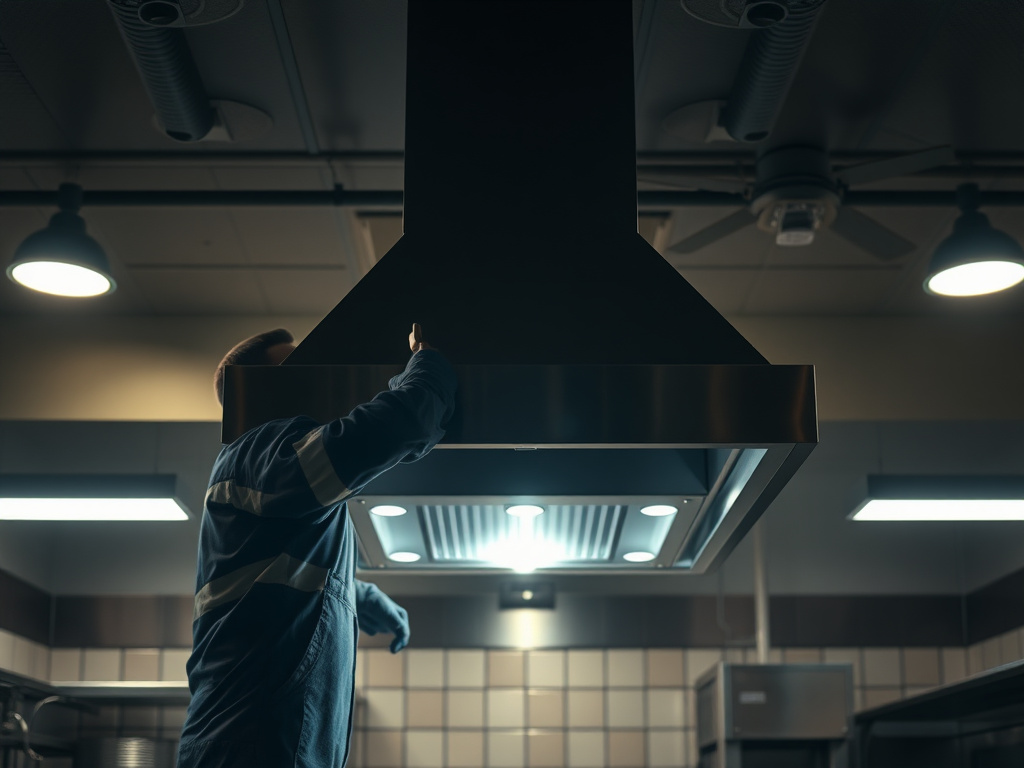
Emergency & After-Hours Hood Cleaning — Phoenix, Same-Night Response
Two kinds of kitchens call us off-hours: the ones that simply can't close for service, and the ones facing an actual emergency. Overnight is our default shift, not a rush surcharge — but when a health inspection is failing tomorrow, a correction notice has a deadline, or a flare-up left grease residue behind, we respond fast with a full bare-metal cleaning and documentation ready by morning. This matters most in Phoenix's dense downtown and Old Town Scottsdale restaurant corridors, where late-night volume and rapid turnaround are constant realities, not occasional exceptions.
What's Included
- Rapid response for health-inspection-failure situations
- Pre-opening emergency cleanouts before a launch date
- Overnight scheduling that never interrupts service hours
- Post-flare-up cleanup coordination after a grease-related incident
- Same-day documentation for time-sensitive correction notices
- Priority dispatch across Phoenix, Scottsdale, Tempe, and the surrounding metro
Health-Inspection-Failure Rapid Response
A failed inspection over a dirty exhaust system usually comes with a short window to fix it before a re-inspection or correction deadline. We prioritize these calls, get a crew out fast, and deliver a full bare-metal cleaning with same-day documentation so you have proof of correction in hand before the inspector comes back — not a promise that it's scheduled for next week.
See our inspection reports & documentation page for exactly what a compliant report needs to include once the cleaning is done — that's what gets handed to you the same day.
Pre-Opening Emergency Cleanouts
New operators taking over an existing kitchen space frequently inherit a hood system with an unknown or undocumented service history. We run emergency pre-opening cleanouts on compressed timelines so a launch date isn't held hostage by a system that turns out to need more work than expected once we're actually inside it.
This is especially common with second-generation restaurant spaces across the metro, where the incoming operator has no way of knowing how thoroughly — or whether — the previous tenant's hood system was ever properly maintained.
Overnight Scheduling as the Default, Not the Exception
For kitchens that run late-night service or never fully close — common across the downtown Phoenix and Old Town Scottsdale corridors — overnight isn't a special accommodation, it's how every visit is scheduled by default. We work between your last ticket and first prep, sheet and seal the cook line, and have the kitchen dry and ready before your morning crew arrives, without ever costing you a service hour.
Split-shift and weekend-only windows are equally routine for kitchens with an unusual schedule — brunch-only weekend concepts, late-night bar kitchens, or venues tied to event and game-day scheduling around the Glendale stadium district. We build the visit around your actual hours, not a standard 9-to-5 assumption.
Grease-Fire-Aftermath Cleanup Coordination
After a flare-up or contained fire event in the exhaust system, getting the hood and duct professionally cleaned and documented is a necessary step before the kitchen can reopen with confidence — residue and heat damage from even a small incident can leave the system in a condition that isn't immediately obvious. We coordinate this cleanup directly, work around any fire-department follow-up requirements, and document the post-incident condition thoroughly.
A post-incident report also matters for your own internal record and for anyone who needs proof the system was brought back to a compliant, bare-metal condition before service resumed — not just cleaned enough to look presentable.
We document post-incident condition specifically for operators who need their own dated, detailed record of what the fire or flare-up affected and what was restored to a bare-metal standard afterward — photos, a written scope of what was found and corrected, and the same certificate and report format used on a standard visit. That record is useful well beyond the reopening itself, as a permanent part of the kitchen's service history showing exactly when and how the system was brought back to a compliant condition.
How Emergency Dispatch & Pricing Actually Works
Emergency service isn't priced as a flat multiple tacked onto a standard cleaning — the actual driver is how fast a crew needs to be pulled off a scheduled route or called in outside normal hours, and how many hood systems are involved. A single-hood restaurant facing a next-day re-inspection is a different dispatch problem than a five-outlet resort property needing an overnight cleanout, and pricing reflects that difference rather than applying one blanket emergency rate to every call.
When you call, we ask the same handful of questions every time: what's driving the urgency, how many systems need service, and what deadline you're working against. That's enough to quote a response window and a price before a crew is dispatched, so you're not committing to an open-ended emergency call without knowing roughly what it costs or when help arrives.
For situations that aren't a true emergency but also can't wait for the next open slot on a normal schedule — a new lease start date, a corporate visit, a change in operating hours — we can usually still move faster than a standard booking without treating it as a full emergency dispatch. Tell us the actual deadline and we'll scope the response to match it rather than defaulting to the highest-priority queue for anything that's simply time-sensitive.
Why Downtown Phoenix & Old Town Scottsdale Need This More
Dense restaurant corridors with late-night bar and nightlife traffic run on tighter margins for downtime than suburban locations with more predictable daytime-only hours. A kitchen in Old Town Scottsdale or downtown Phoenix that closes for even one unplanned day during a busy weekend loses real revenue — a bigger differentiator here than it would be for a quieter suburban location, which is why fast, off-hours response is built into how we operate in these corridors specifically.
We keep crew availability weighted toward these corridors on weekend nights specifically because that's when an unplanned closure hurts the most and when a fast response matters more than almost anywhere else in the metro.
What to Have Ready When You Call
The fastest emergency response happens when we know what we're walking into: whether this is an inspection-driven deadline, a pre-opening situation, or a post-incident cleanup, roughly how many hood systems are involved, and any correction-notice deadline you're working against. That lets us dispatch the right crew size the first time instead of a return trip.
If you have a copy of your last cleaning certificate or correction notice, having it on hand speeds things up further — it tells us exactly what an inspector flagged and what standard we need to document meeting before you reopen.
Phone-First When It's Actually Urgent
For a true emergency — an inspection deadline tomorrow, a correction notice, a post-incident cleanup — a phone call gets a faster response than a form submission sitting in a queue. Call us directly when time matters, and use the standard quote request for anything on a normal timeline. We route emergency calls straight to dispatch rather than through the regular quote pipeline.
If you're not sure whether your situation counts as urgent enough to call, call anyway — we'd rather field a call that turns out to be routine than have a kitchen sit on a real deadline because it went through the standard queue.
Emergency & After-Hours — Common Questions
Ready for Emergency & After-Hours?
Get a same-day quote with overnight scheduling and full NFPA 96 documentation.