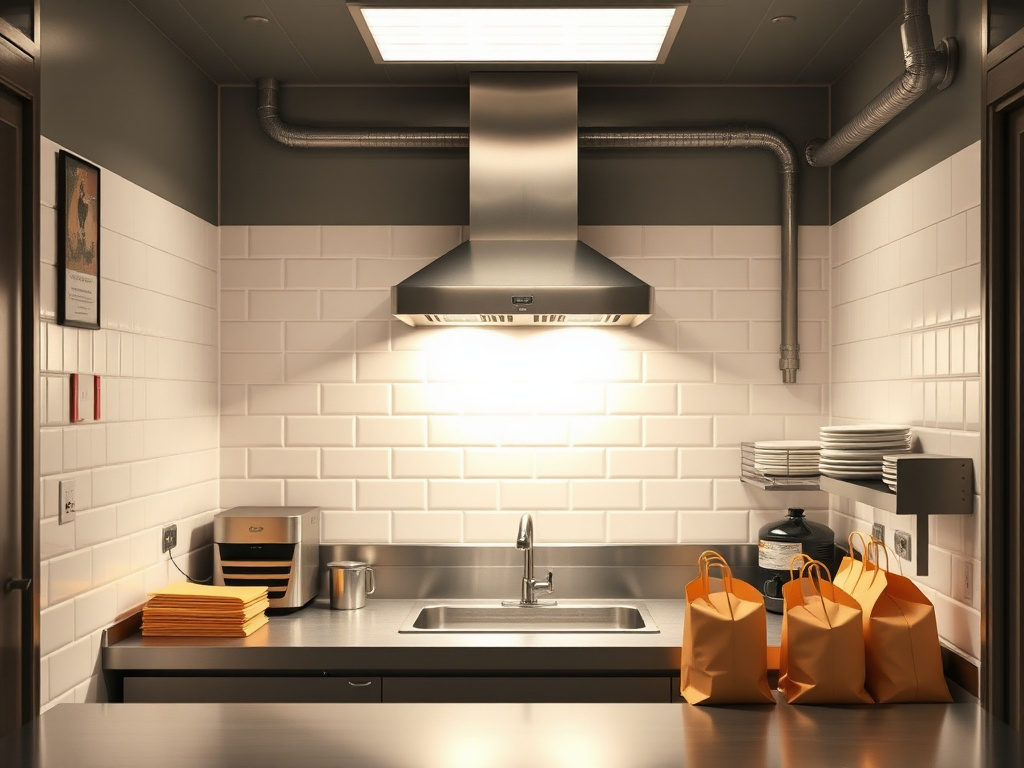
Ghost Kitchen, Food Truck & Commissary Hood Cleaning — Phoenix
Ghost kitchens, food trucks, and shared commissaries are the fastest-growing segment of Phoenix's foodservice scene — and one of the most misunderstood when it comes to fire code. Delivery-only kitchens with no dine-in room still fall fully under NFPA 96, and multiple brands running off one shared hood at 12–24 hour duty cycles hit the aggressive quarterly cleaning tier faster than a typical single-concept restaurant. We handle multi-tenant commissary documentation, per-bay pricing, and fast-turnaround food truck cleanings built around how these operations actually run.
What's Included
- Full NFPA 96 cleaning regardless of dine-in status
- Per-tenant documentation for shared commissary hood systems
- Per-bay pricing for multi-brand commissary kitchens
- Food truck hood system cleaning at your commissary location
- Fast-turnaround scheduling built for high-throughput virtual-brand kitchens
- Commissary landlord/tenant documentation splitting on request
Delivery-Only Kitchens Still Need Full Compliance
There's a common misconception that fire-code cleaning requirements are somehow lighter for a kitchen with no dining room. They're not. NFPA 96 applies to the exhaust system based on what and how much you cook, not on whether customers sit down to eat it. A ghost kitchen running the same charbroiler and wok volume as a full-service restaurant faces the exact same frequency tier — the absence of a dining room doesn't reduce the grease going through the hood.
This misconception can be an expensive one. A delivery-only operator who assumes fire code doesn't apply to them the same way is often the one furthest behind on documentation when a landlord, commissary operator, or fire inspector eventually asks for proof of a current cleaning.
Why Ghost Kitchens Hit the Aggressive Tiers Fastest
Multiple virtual brands frequently run off a single shared hood in one commissary bay, often on 12–24 hour duty cycles to maximize the delivery windows served across brands. Under NFPA 96 Table 12.4, that combination of high volume and extended hours lands squarely in the quarterly tier, and any kitchen running more than 16 hours a day moves toward the monthly tier. Ghost kitchens frequently hit these thresholds faster than a traditional single-concept restaurant would.
We assess the actual combined cooking volume running through a shared hood — not just one tenant's output — since that's what determines the true frequency tier the whole system needs to be on.
Commissary Documentation When Multiple Tenants Share One Hood
Shared commissary kitchens create a documentation question that doesn't come up in a single-tenant restaurant: whose name goes on the certificate when four different virtual brands are cooking off the same exhaust system? We split documentation by tenant on request — each operator gets records showing their brand's compliance status, while the commissary landlord or operator retains the master service record for the shared hood itself.
This matters most for commissary operators who are themselves accountable to a health department or landlord for every tenant's compliance — a clean, per-tenant paper trail means one problem operator doesn't put the whole commissary's standing at risk.
Food Truck Hood Systems
Food trucks run smaller, self-contained hood systems that still fall under the same NFPA 96 cleaning requirement as a fixed-location kitchen. We clean truck hood systems at your commissary or home-base location, scheduled around your service route so the truck isn't out of commission during a peak delivery or event window.
Truck operators working the Phoenix festival, farmers-market, and event circuit often need documentation on hand for event organizers or venue requirements, not just a fire marshal — we provide the same certificate and written report for a truck as we would for a fixed-location kitchen.
Fast-Turnaround Scheduling
High-throughput virtual-brand kitchens don't have the downtime windows a traditional restaurant does — there's no slow Tuesday afternoon lull when a delivery-only kitchen is running multiple brands around the clock. We build tight, fast-turnaround service windows specifically for this segment rather than defaulting to a scheduling approach built for sit-down restaurant hours.
We work with commissary management directly to find the shortest realistic window across every tenant's peak delivery hours, so one shared hood cleaning doesn't mean every brand in the building loses a full day of order volume.
Multi-Tenant Billing
Per-bay pricing means each brand or tenant in a shared commissary can be billed individually for their portion of the service, rather than the commissary operator absorbing the full cost and trying to divide it internally. Ask us about multi-tenant billing setup when you request a quote — it's a common enough arrangement in the Phoenix ghost-kitchen scene that we have a standard process for it.
Commissary operators can also set up the full facility under one master agreement while still invoicing tenants individually, which keeps the operator's own accounting simple without pushing the coordination burden onto each brand.
Inspection Readiness for Commissary Landlords
A commissary landlord carries a different kind of exposure than a single-tenant building owner — one hood system serving four, six, or more independent brands means one dirty exhaust system can put every tenant's ability to operate at risk, not just the tenant whose cooking caused it. When a fire inspector or health inspector visits a shared commissary, they're generally evaluating the building's systems as a whole, and a landlord who can't produce current documentation for the shared hood is exposed regardless of which individual tenant's cooking created the buildup.
We work directly with commissary landlords and operators to keep the shared system's documentation current independent of any single tenant's compliance status, and we can structure the contract so the landlord holds the master service agreement for the shared hood while individual tenants are billed their portion under the per-bay arrangement described above. That keeps the commissary's own standing with an inspector separate from whether any one tenant renews on time.
For landlords bringing on new tenants regularly, we can also run a baseline inspection of the shared hood system before a new brand moves in, so there's a clear record of the system's condition at handoff rather than an assumption that whatever the last tenant left behind is still in compliant shape.
Phoenix's Growing Commissary & Delivery-Only Scene
Phoenix has seen fast growth in shared commissary kitchens and delivery-only footprints over the past several years, from single-bay operators renting commissary space to multi-brand virtual restaurant groups running several concepts out of one location. That growth has outpaced how well most cleaning vendors understand the segment — multi-tenant billing, shared-hood documentation, and fast-turnaround scheduling aren't things a typical single-restaurant cleaning service is set up to handle well, but they're exactly what this segment needs.
That growth is concentrated in specific pockets of the metro — light-industrial and flex-space corridors in Phoenix, Tempe, and Mesa where commercial kitchen space is easier to permit and lease than a standalone restaurant build-out — and it's exactly the kind of cluster where a single shared-hood cleaning vendor familiar with multi-tenant billing and documentation saves every operator in the building from solving the same problem independently.
Ghost Kitchen & Food Truck — Common Questions
Ready for Ghost Kitchen & Food Truck?
Get a same-day quote with overnight scheduling and full NFPA 96 documentation.