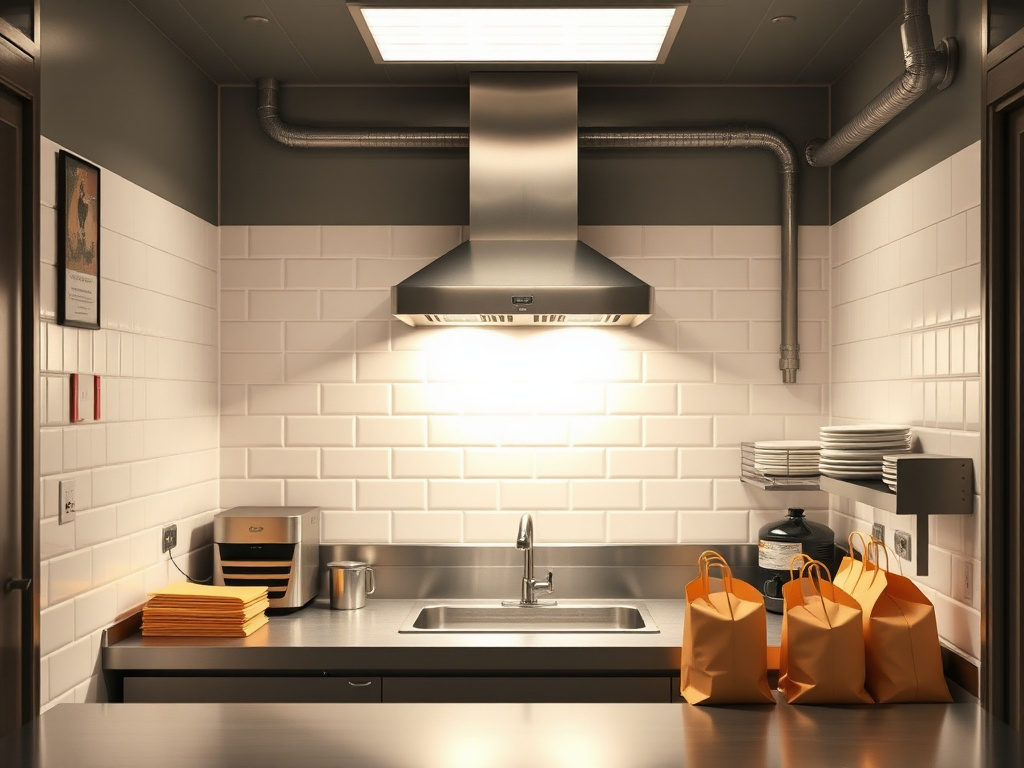
Phoenix's delivery-only and shared-commissary kitchen segment has grown fast, and a misconception has grown right along with it: the idea that because there's no dining room, no host stand, and no guests walking through the door, a ghost kitchen or food truck doesn't need to meet the same fire-code hood cleaning requirements as a traditional restaurant.
That's not true, and it's worth correcting clearly, because it's a compliance gap that can catch an operator off guard at the exact moment they can least afford it — during a fire-marshal inspection, a lease renewal that requires proof of compliance, or after an incident.
NFPA 96 Applies to the Cooking Operation, Not the Dining Room
NFPA 96 governs ventilation control and fire protection for commercial cooking operations. The standard is triggered by the presence of a commercial cooking exhaust system processing grease-laden vapors — it has nothing to do with whether there's a dining room attached to that kitchen. A delivery-only kitchen running a full commercial exhaust hood over a fryer and flat-top is subject to exactly the same NFPA 96 requirements as a sit-down restaurant running identical equipment.
The dine-in-versus-delivery distinction matters for a lot of other regulatory questions — zoning, occupancy classification, seating-related fire code — but it is not a factor in whether hood cleaning and exhaust-system fire code applies. If your kitchen has a Type I hood over grease-producing cooking equipment, NFPA 96 applies, full stop.
Why Ghost Kitchens Often Need MORE Frequent Service, Not Less
Here's the part that surprises a lot of ghost-kitchen and virtual-brand operators: not only does NFPA 96 apply, but duty-cycle math frequently pushes delivery-only kitchens into a higher cleaning-frequency tier than a comparable traditional restaurant, not a lower one.
NFPA 96 Table 12.4 frequency tiers are based on cooking volume and type — and a high-throughput ghost kitchen running multiple virtual brands out of one shared hood system can generate cooking volume well above what a single traditional restaurant concept produces in the same hours, for a few structural reasons:
- Multiple virtual brands sharing one kitchen means the exhaust hood is processing cooking output from several concurrent menus, not just one restaurant's normal service volume
- Delivery-optimized hours often mean near-continuous operation across lunch, dinner, and late-night windows, rather than the more limited service windows of a typical dine-in restaurant
- High-throughput equipment usage — fryers and flat-tops running at sustained capacity to fill a steady stream of delivery orders — produces a different grease-generation profile than intermittent dine-in cooking with natural lulls between rushes
A ghost kitchen that looks, on paper, like a small commercial kitchen can easily land in NFPA 96's quarterly (high-volume) tier once actual duty cycle is accounted for — the same tier that applies to 24-hour diners and dedicated charbroil/wok restaurants — even though there's no dining room and no visible line out the door to signal that volume to anyone walking by.
Food Trucks Have Hood Systems Too
The same logic applies to food trucks and mobile kitchen units with a grease-producing cooking exhaust system on board. A food truck running a fryer or flame-cooking setup under a Type I hood is subject to NFPA 96 the same as a fixed-location kitchen. The compliance obligation doesn't disappear because the kitchen has wheels — it just adds a layer of complexity around documentation and scheduling, since a mobile unit needs a provider who can work around its route and parking schedule rather than a fixed commercial address.
Shared Commissary Kitchens: A Documentation Complication
Phoenix's growing shared-commissary-kitchen footprint adds a wrinkle that traditional single-tenant restaurants don't deal with: multiple ghost-kitchen operators or food truck businesses often share one hood system and exhaust infrastructure inside a single commissary facility.
That shared-infrastructure setup means documentation has to be handled carefully — a fire marshal or health inspector needs to be able to verify that the shared system as a whole meets its required frequency tier, and commissary operators need billing and documentation structured so that each tenant's compliance obligations are clear even though they're not each individually contracting for a separate hood system. This is a landlord/tenant documentation-splitting question worth resolving with your cleaning provider up front, rather than discovering the gap during an inspection when multiple businesses are relying on the same paperwork.
Fast-Turnaround Scheduling for High-Throughput Kitchens
Because ghost kitchens and commissary facilities frequently run near-continuous hours to serve delivery demand across multiple dayparts, finding a service window is a genuinely different scheduling problem than a restaurant with clear open/close hours. Fast-turnaround scheduling — working around the shortest low-activity window in a near-continuous operation, rather than assuming a long overnight closure like a traditional restaurant — is usually the practical answer, coordinated directly with kitchen management rather than defaulting to a generic overnight slot that may not actually exist for a 24-hour virtual-brand operation.
Frequently Asked Questions
Do ghost kitchens and food trucks have to follow the same NFPA 96 rules as full-service restaurants? Yes. NFPA 96 applies to any commercial cooking operation with a grease-producing exhaust hood, regardless of whether there's a dine-in dining room. Delivery-only kitchens and food trucks with Type I hoods over cooking equipment are subject to the same cleaning-frequency and documentation requirements as any traditional restaurant.
Can a ghost kitchen actually need MORE frequent cleaning than a regular restaurant? Yes, and it's common. High-throughput ghost kitchens running multiple virtual brands out of one hood system, often across near-continuous hours, can generate cooking volume that lands them in NFPA 96's quarterly high-volume tier — the same tier as 24-hour diners and dedicated charbroil restaurants — even without any dine-in service.
How does documentation work when multiple ghost-kitchen tenants share one commissary hood system? It needs to be structured so the shared system's compliance is clearly documented as a whole, while each tenant's individual obligations and billing are clear. This is worth setting up directly with your cleaning provider rather than assuming it will sort itself out during an inspection.
If you run a ghost kitchen, virtual-brand concept, food truck, or shared commissary kitchen in the Phoenix metro area, call PHX Hood Vent Cleaning at 844-967-5247 or email josh@contractorschoiceagency.com to request a free quote — ask about our multi-tenant commissary billing and fast-turnaround scheduling for high-throughput kitchens.